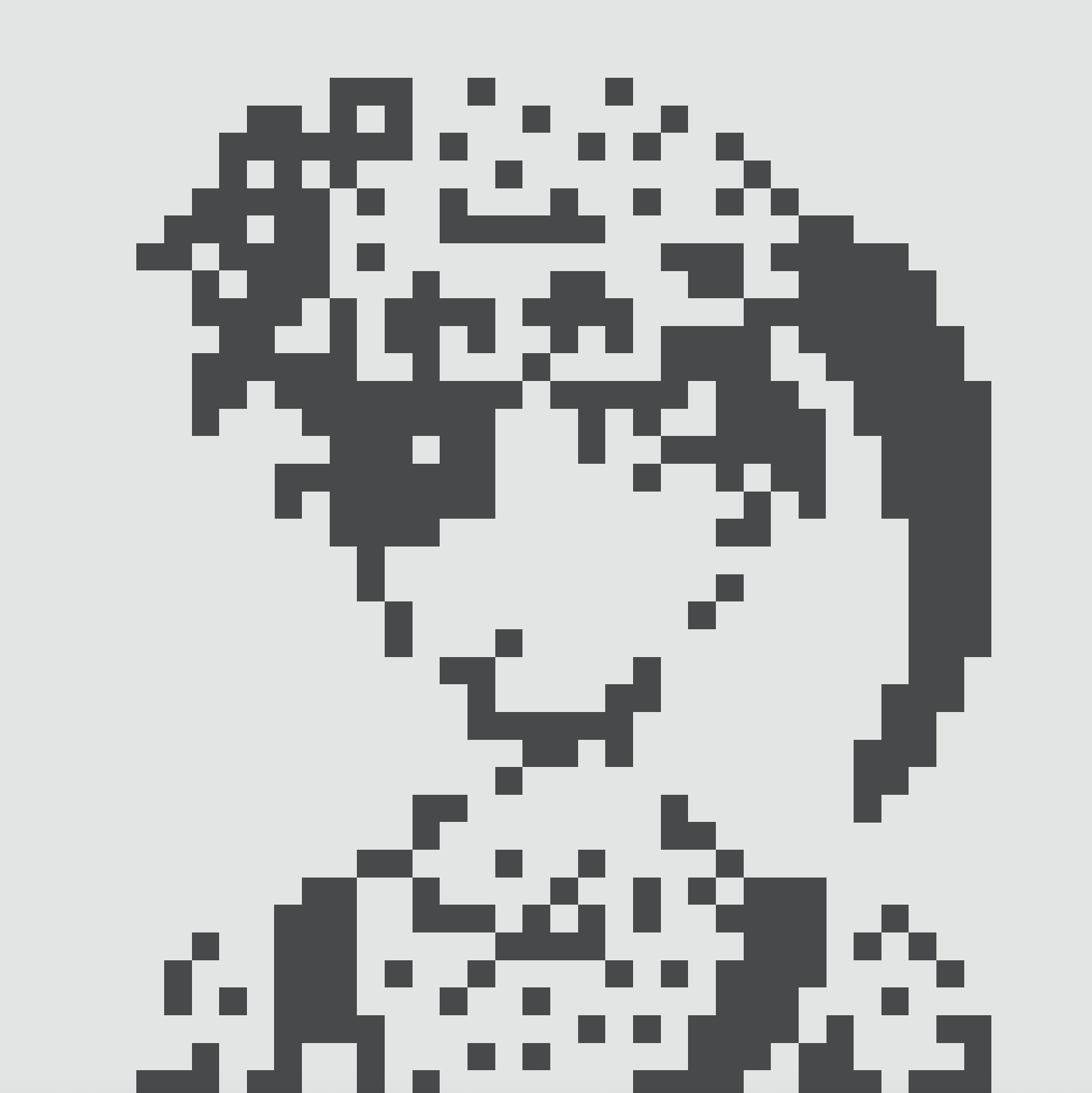
A generative faces ecosystem, not just a static PFP set.
Normies began as a collection of 10,000 monochrome pixel faces, generated with AI assistance and designed to live entirely on Ethereum. What makes the project compelling is not only the collection itself, but the way it extends into a broader on-chain identity system: editable faces, public-domain art, developer composability, and a culture that encourages building directly on top of the underlying pixels.
In collector terms, Normies sits at an interesting intersection. It has the visual directness of a classic internet-native avatar project, but it also carries the technical seriousness of a fully on-chain ecosystem. That combination is exactly what makes it worth documenting.
It is also important to distinguish between the original mint count and the current live supply. While 10,000 Normies were minted initially, the number of Normies still in circulation is lower because holders can burn one or more tokens to modify another one on-chain. Using the current figure for April 12, 2026, the circulating count stands at 8,287, and that number can continue to decline over time.
One of the most important things about Normies is that the collection does not depend on a fragile stack of external services. The project is built around permanence, compactness, and direct readability from the chain itself.
Compressed pixels, contract-native rendering.
Each Normie is structured as a 40 × 40 monochrome bitmap, which means 1,600 pixels per face. According to the material you shared, the pixel data is compressed into roughly 200 bytes per token and stored on-chain through an architecture built around SSTORE2 pointers.
Rendering happens on demand through Ethereum smart contracts, using a row-scan style compression and SVG generation flow. In practical terms, that means the art is not merely referenced by the contract: it is reconstructed from the contract’s own stored data.
Readable, reusable, and easy to build on.
Because the code, the contracts, and the art are open, the faces become highly composable building blocks. Developers can read the underlying pixels, integrate them into third-party applications, or reinterpret them inside games, tools, and derivative experiences without running into hard technical or legal barriers.
That interoperability matters. It pushes Normies beyond simple ownership and into a more durable category: on-chain identity primitives that other builders can plug into directly.
Four broad families of faces.
The collection is structured around four visual categories: Humans, Cats, Aliens, and Agents. That gives the set enough internal variety to feel alive, while still preserving the discipline of a tightly constrained monochrome system.
The visual philosophy is especially strong: off-black, off-white, off-perfect. That phrase captures the appeal of Normies very well. These are not polished, over-rendered images. They are simple enough to be iconic, but open enough to be reinterpreted continuously.
CC0 turns the collection into shared raw material.
Under a CC0 framework, the art belongs to everyone. That is not just a legal choice; it is a design philosophy. It invites remixing, adaptation, and the creation of entirely new layers of meaning around the original pixel faces.
In that sense, Normies behaves less like a closed edition and more like a public visual language. That matters a lot for long-term relevance, especially in a space where the strongest projects often become tools, references, and shared cultural objects rather than isolated collectibles.
Early momentum with technically-minded collectors.
The sales has been more than 1,000 ETH in OpenSea volume in only a few weeks, along with a visible concentration of attention from historically-oriented collectors, especially those already active around CryptoPunks. That is a meaningful signal: projects like this tend to resonate with people who care about permanence, structure, and origin stories.
Modification through destruction.
One of the strongest ideas in the ecosystem is the burn mechanic: collectors can destroy one or more Normies in order to improve or modify another one on-chain. That introduces a live evolutionary layer into the collection and means the current supply is not fixed at the original mint number forever.
It is a very different kind of rarity model. Instead of relying only on static issuance, Normies allows rarity and identity to shift over time through irreversible, on-chain sacrifice. That is why the historically correct framing is: 10,000 minted at origin, 8,287 still in circulation as of April 12, 2026, with the possibility of further decline.
The most interesting part of the project may be that it does not behave like a finished endpoint. It looks much more like a platform that can keep evolving.
Normie Canvas
A system for burning Normies to obtain pixels and permanently modify surviving faces on-chain.
Normie Arena
A PvP concept where Normies battle and compete over pixels, extending identity into gameplay.
AI Agents
Ongoing experiments around artificial intelligence integrated into the broader Normies ecosystem.
Events
International community-facing activity, including conference sponsorships and immersive activations.
Why Normies belongs on this site.
Normies matters because it treats the NFT not as a lightweight image reference, but as a durable on-chain object with technical depth, legal openness, and room for reinterpretation. It is both a collection and an infrastructure layer.
That combination makes it highly relevant to a site like this one. Provenance is not only about who owned a token. It is also about where the artwork lives, how much of its identity survives on-chain, and whether the collection can still be read and built on years later.